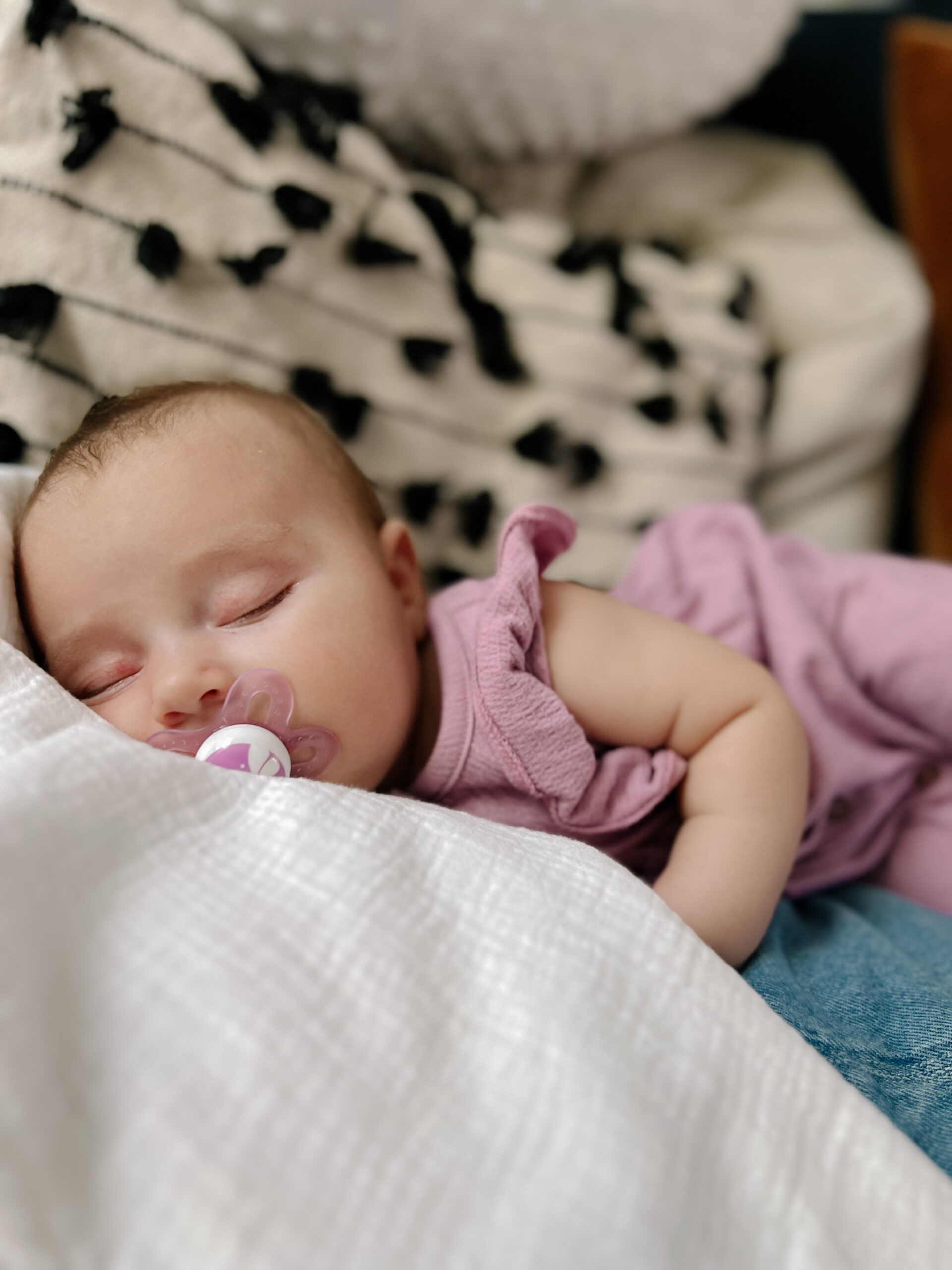


Now before I dive in, I cannot promise that any of this will actually work for you. I like to believe that the sleep habits of my children were all my doing, but it was likely quite a bit of good luck if I’m being honest. With each child of ours, everyone would tell me, “just wait for the next- one won’t sleep!” But, that “next” never came. We have truly been blessed 4 for 4.
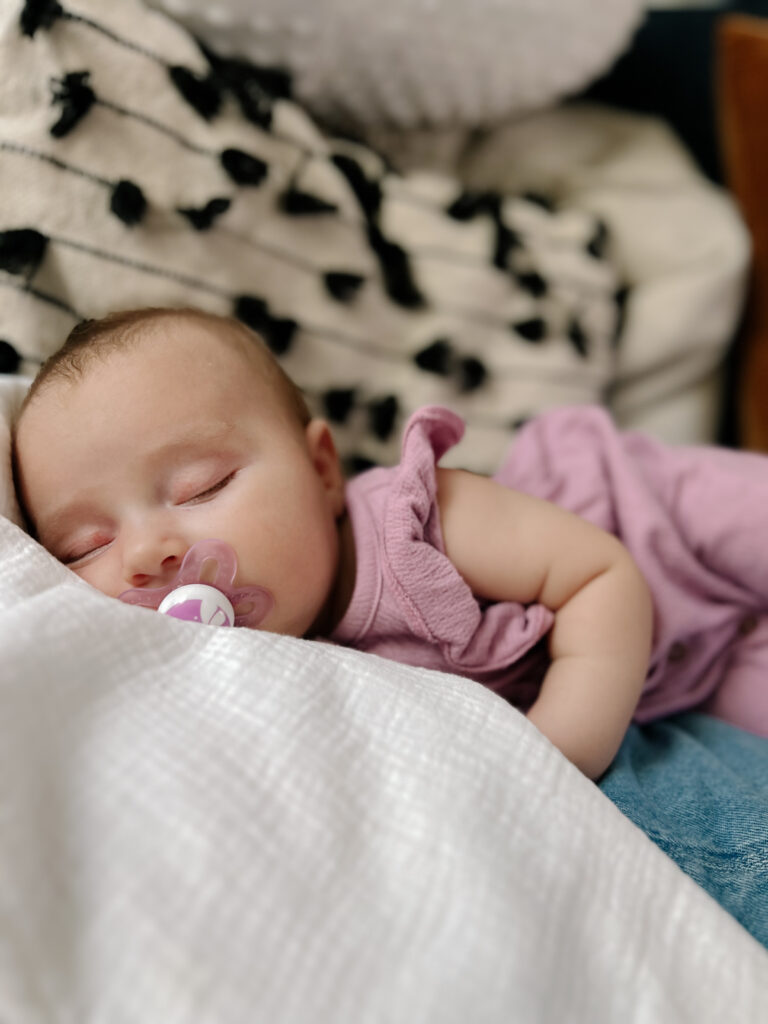
Our littlest girl is now rounding 3 months old and is down to a single feed overnight and has even had a couple of straight through, 12-hour nights (hello, mastitis. that was a first!). After sharing this so many people responded wanting my tips and tricks for sleep, so here I am to give them to you. Without an ounce of science or citations (although, I have done my fair share of research), without any professionalism, and by all means, just a Mom that has gone through sleep training successfully four times now, I’m here to share with you my good luck.
My Foundational Mindset
Before I even dive into some of my tips and tricks, I think it’s best to start with my overall mindset around baby/child sleep. Teaching sleep to your baby should happen immediately. With each baby we’ve had, my first goal has always been to get them to sleep, and to sleep well. I do not follow any type of “sleep training” program out there, I simply do what makes the most sense to me. Some of my foundational thoughts around child sleep, which ultimately drive our sleep decisions are:
- Sleep is crucial for child development. Okay, this part is science and if you aren’t sure how sleep directly impacts human development, I highly suggest starting there. I do not view our children’s sleep as a “I need them to sleep, so I can sleep” mindset. Instead, I prioritize the need for sleep and GOOD sleep for their development and growth. This ultimately helps me view their sleep as a necessity and important versus an annoyance (because I’ve been there, too! there is nothing more annoying than a toddler avoiding sleep at all costs!)
- Babies need to be taught how to sleep well. Yes, babies know how to sleep. And they can do it very well at first. But after some time, a baby does need to be taught sleep basics. Such as how to stay asleep, how to fall back asleep, and the difference between day time naps and overnight sleep. Babies do not come out knowing the difference between night and day- they have to be taught this. And this is a HUGE distinguishment that affects their sleep.
- Sleep associations are your biggest asset. Like I just mentioned about babies needing to learn how to sleep, you must think about how you have learned things in life. We all learned PEMDAS right? We associated each letter to a certain function. Babies and children are wired the same way. Giving them things to associate sleep to will help them anticipate and prepare for what’s to come.
- Children do not sleep well if you limit their sleep. There is nothing further from the truth then when I hear people say, “they missed their nap, so they’ll sleep well tonight!” or “keep ’em awake, they’ll sleep in for you tomorrow.” WRONG. If anyone has a toddler, you know damn well they are up 2 hours earlier than they’d normally be. There’s never any “sleeping in” going on around here. In fact, an overtired baby and child actually have a more difficult time sleeping at night if they aren’t sleeping well during the day (of course, knowing when to cut naps is a different topic). But do not deprive your child of a nap on the account of nighttime sleep. It will likely backfire on you big time.
- Lastly, take things one sleep at a time. I tend to focus on independent nighttime sleep above all else to begin with. Once that falls into place, then I start focusing on daytime sleeps and routines. Don’t try to make it all happen at once. One day, one sleep at a time.
Now, My Tips and Tricks

- Keep the lights and noise on during the day. Remember, you have to teach your baby the difference between day and night. When the baby is napping during the day, open the windows! Turn on the lights! Keep the tv on. If you are creating an environment that mimics nighttime, there will be no distinguishing between day and night. So your baby won’t know when that longer stretch of sleep is expected of them.
- At night, turn it all off and use a sound machine. Again, create a nighttime association. I don’t do anything more than the average joe. Blackout curtains, sound machine, sleep sack. I use these three things at night, ONLY. Once nighttime sleep has been well established, then I start using these for daytime naps as well (with the exception of the sound machine- I will use a sound machine or susher during the day from the get go).
- Contact naps during the day to teach lengthy sleep times. For the first few weeks and months, babies wake themselves out of sleep cycles often. From those small jerky hand movements, to startles, they have a difficult time staying asleep for very long. I use contact naps as often as possible those first few months to help teach lengthy sleep (ensuring your baby gets those REM sleeps in!), and even more importantly, to avoid an overtired baby. Overtired babies are the hardest little things to get to sleep.
- A well fed baby is a happy baby and a happy baby is a sleepy baby. I said what I said. Slightly forget that 3 hour feeding schedule for the first few months and feed your baby. That 3 hour mark is there as an ending timeframe. Do not go past 3 hours without feeding your baby sort of rule. But it does not mean hold off a feeding until then. Feed your baby when they cue for it. Every time. PLUMP THEM UP. A well fed baby is happy. And a full-bellied, happy baby sleeps.
- Sleep routines are crucial for the older years. Humans are habitual, we love a schedule and we love a routine. This isn’t any different for your babies and children. In fact, children thrive off of routine. The circadian rhythm does too (just think about yours, our bodies crave sleep at the same time each day). Currently, we move everyone upstairs to start getting ready for bed between 7-7:15. We brush our teeth, put on pajamas, read a few books and then hit the hay. This has been their bedtime routine since they were weeks old. Establish a routine and keep with it. Set a bedtime and do not stray from it. It takes a while for our bodies to adjust to new routines, so if your child isn’t responding well at first, keep with it. Don’t start changing bedtimes and routines after 3 days of trying- their little bodies haven’t adjusted just yet. Give them a good long while to test it out, then adjust.
Where Are We in Our Sleep Journey
At 6, 4, and 3, our oldest three sleep soundly, 11-12 hours each night. Sadie is currently approaching that 3-month mark. She has been sleeping well overnight. Last week, she gave us 3 nights of a 12-hour stretch. For the past month, she has only been waking once to feed. Each night, we swaddle her up (arms are out now, she was beginning to get frustrated in a full swaddle once she found her hands- she wanted them out to chew on), turn on the sound machine, and I nurse her to sleep in our room, in the pitch black. Once she falls asleep I lay her in her bassinet and I wait around. If she wakes, I give her a pacifier and wait. If that doesn’t settle her, I’ll nurse again until she falls asleep post transfer.
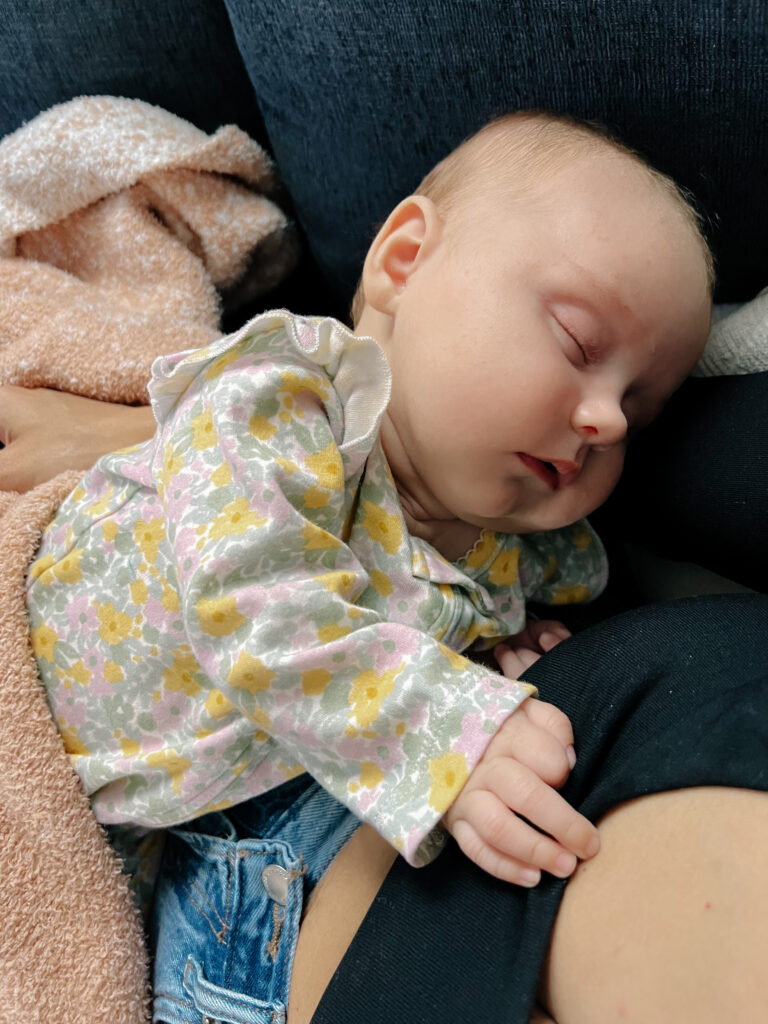
Now that she has established good overnight sleep, we are starting to work on day time naps, one nap at a time. With her eating every 2-3-ish hours, her wake windows are anywhere from 1-1.5 hours (including the time it takes her to feed). Her first two naps have been strong so far. After her wake window, I still help her in falling asleep for these daytime naps. I swaddle her up in her nursery, turn on the sound machine, and black out the room (notice, I’m now bringing over her nighttime associations into the daytime because she’s built familiarity). I rock her in the rocking chair until her eyes are almost asleep and then lay her down in her crib. If she cries, I rock her some more or give a pacifier. Again- still assisting her in figuring it out. Her afternoon/evening naps are still rocky, so we still usually do a contact nap for those (avoiding that over-tiredness as to not mess up her overnight sleep).
Baby sleep is small progressions. You can’t do it all at once. It’s baby steps- HA!
My Honest Thoughts
Honestly, I think people scare us about baby and toddler sleep. It’s the first thing people comment on when you’re pregnant. How you better get used to no sleep. You won’t be sleeping much. They worry us so much so that we over complicate it. At the end of the day, our babies are humans. Their bodies function the same way ours do. When you understand your own need for sleep and how important it is, you understand a babies need for it and how to make it happen. Keep it simple.
Great article! I really appreciate the clear and detailed insights you’ve provided on this topic. It’s always refreshing to read content that breaks things down so well, making it easy for readers to grasp even complex ideas. I also found the practical tips you’ve shared to be very helpful. Looking forward to more informative posts like this! Keep up the good work!